This is a SEO version of Toledo Football Media Guide - 2012. Click here to view full version
« Previous Page Table of Contents Next Page »146 HISTORY
the seats and locker rooms, and to install perma-nent fencing that enclosed the entire stadium. A new $120,000 electronic message board fol-lowed in 1975. In 1978, a new lighting system was installed. In 1979, an extensive concrete replacement, in addition to new restrooms and concession stands, was built on the west side. Improvements to the stadium and the in-crease in seating capacity could not keep pace withdemand, however. Jammedwith standing-room-onlycrowds, spectatorsheadedforhigher ground and at many games ended up sitting on the stone wall surrounding the feld. In fact, UT led thenation inpercentageof attendance from 1982-84 and had an incredible rating of 135.1 percent in 1982. One of the most memorable games was the Bowling Green contest on Oct. 23, 1982, when 31,369 people jammed into the Glass Bowl to see the Rockets’ 24-10 victory.
By the 1980’s, the Glass Bowl’s age, combined with its frequent overfow crowds, necessitated change. That change began on May 25, 1989, when the frst shovels of dirt were turned at a festive ground-breaking ceremony, signaling the beginning of the $18.5-million renovation of the Glass Bowl.
The oldwoodenpressbox, whichhad a capacity of 53, was replaced by a new three-level press tower that seats 1,070.The tower houses amodernmedia communication center that seats over 100 media personnel, 45 private suites and a 300-seat stadium club.
The second part of the renovation project was the construction of the Larimer Athletic Complex. The head-quarters for theRocket football team, theLarimerAthletic Complex is located at the north end of the stadium. The structure contains a state-of-the-art strength and con-ditioning facility, locker room, sports medicine center, equipment room, academic resource center, ofces and meeting rooms.
One of the most appealing aspects of the Glass Bowl renovationwas theway inwhichthearchitects introduced a modern look while keeping the favor and atmosphere of the old stadium intact. The two towers and the stone outer wall remain, giving the Glass Bowl a look and feel unlike any other football stadium in America.
Within the community, fnancial support for the project has been tremendous. Over 90 percent of the renovation cost has come through donations from the private sec-tor, and through the leasing of the suites and seats in the stadium club.
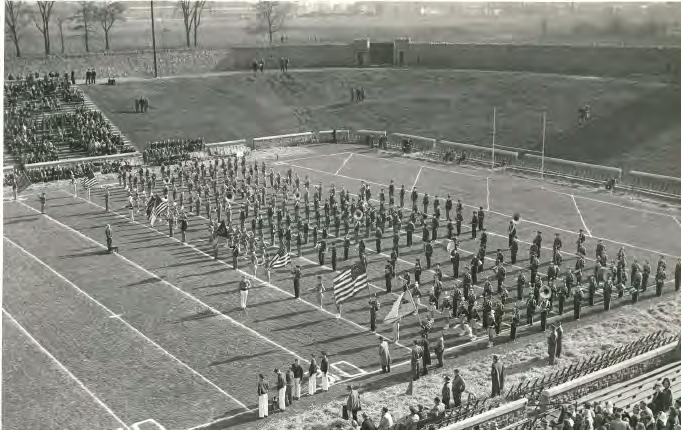
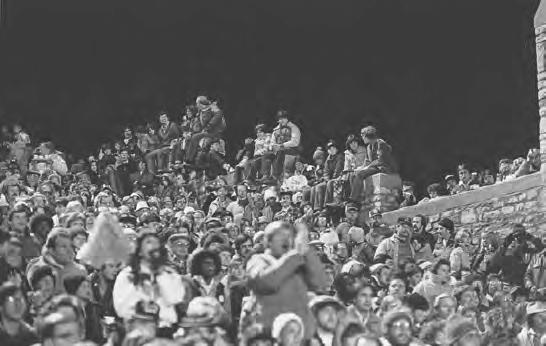
OverfowcrowdsmadeexpansionoftheGlassBowl inevitable. More than 31,000 fans crammed into the old stadium to see the Rockets defeat Bowling Green, 24-10, in 1982.
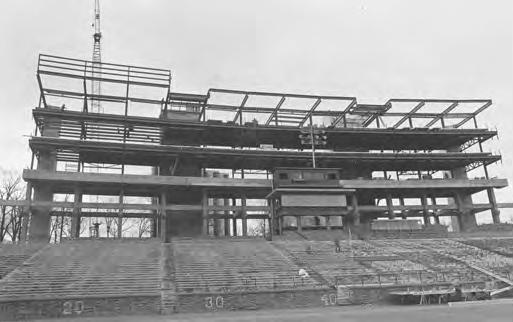
The old press box, which could barely seat 50 members of the media, was dwarfed by construction of the new press tower in 1990.

-Continued from previous page-

ass Bowl History

Until construction of bleachers in 1966, the south end of the Glass Bowl was a sloping, grass-covered hill.
This is a SEO version of Toledo Football Media Guide - 2012. Click here to view full version
« Previous Page Table of Contents Next Page »